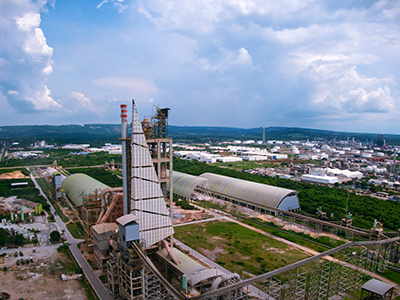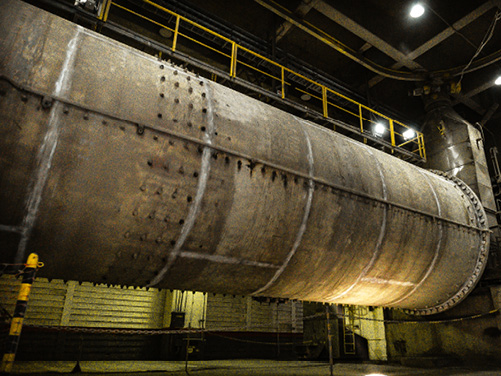
While the global macroeconomic scenario in 2025 was challenging, the cement industry in some Latin American countries performed remarkably well. Colombia saw a 7.8% increase in production, followed by Argentina with 5.6% and Brazil with 4.1%.
The situation was different in Chile, which experienced a complicated election year, ultimately hindering many investments, particularly in public infrastructure.
Mexico also faced a similar negative trend, not so much due to a political crisis, but rather a very difficult economic and financial situation. State investment in public works fell by 43%, directly impacting the entire construction sector and the Mexican cement industry as a whole.
Argentina
According to data from the Portland Cement Manufacturers Association (AFCP), cement shipments totaled 10,100,000 tons in 2025, a 5.6% increase compared to 2024, but marked a slight decline at the end of the year, reflected in the 9.7% monthly drop in December.
The reduction in cement shipments is related to the cuts in public works projects, a measure implemented by the government to curb public spending, which resulted in a 24% decrease in 2024 compared to the previous year.
As for the construction sector, it registered a year-on-year contraction of 4.7% in November 2025, according to the Construction Activity Indicators Report (ISAC).
The official report states that the ISAC index in its original series showed a value of 142 in November 2025, compared to 150 in November 2024. However, in seasonally adjusted terms, the index fell 4.1% compared to October 2025.
Despite the negative performance, the cumulative total for the first 11 months of 2025 confirms an increase of 6.6% compared to the same period in 2024, maintaining a moderate growth dynamic for most of the year. Of the total shipments last year, those destined for the domestic market amounted to 10,010,000 tons (99.3% of the total), representing a year-on-year increase of 5.5%.
- Exports, meanwhile, reached 74,000 tons (the remaining 0.7%) and showed a 21.4% increase compared to 2014.
- As for imports, which were zero in December, totaled 2,800 tons for the year, representing a 40% year-on-year decrease.
Bolivia
According to figures from the National Institute of Statistics (INE), cement production in the first 10 months of 2025 totaled 3,400,000 tons. In October, cement production and sales in the country increased by 6% and 10%, respectively, compared to September.
The data shows that cement production in October rose by 6% compared to September, increasing from 355,000 tons to 378,700 tons; while sales rebounded by almost 10%, rising from 340,000 to 373,000 tons in one month.
However, compared to last year, data indicate that October of this year saw a 4% increase in production compared to the same month in 2024, rising from 363,784 metric tons to 378,661 tons.
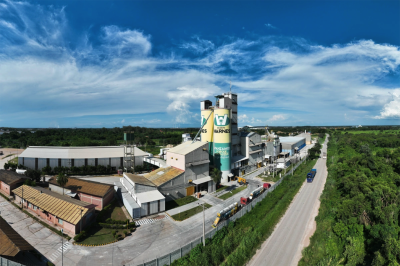
Cement firm Soboce inaugurated the modernization of its Warnes cement plant, implementing significant new equipment that positions it as the most automated plant in the country. The company presented a series of improvements that strengthen its efficiency, sustainability and operational safety.
The new systems implemented to reduce emissions and optimize material handling include the containment of the bagging and palletizing system, emissions reduction, and the contained transport of dust. A high-efficiency conveyor belt was also implemented, reducing friction, losses, and energy consumption, along with two state-of-the-art vertical mills that improve production capacity.
The plant incorporated automatic unloading systems, sensors, and optimized forklifts for containers. The cooling process for IP-40 cement was also modernized, guaranteeing a high-quality product.
Soboce also presented its intelligent online monitoring system for the entire production process, a tool that allows for anticipating failures, planning maintenance, and extending the lifespan of equipment. This advancement also reduces personnel exposure to hazardous areas, reinforcing operational safety.
Brazil
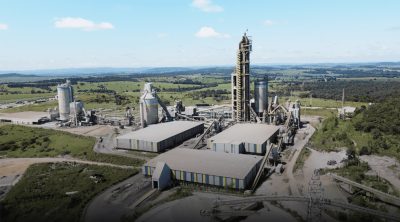
Data published by the National Union of the Cement Industry (SNIC) indicates that cement sales in November reached 5.5 million tons, representing a 4.1% increase compared to the same month in 2024.
Year-to-date (January to November), cement production reached 62.2 million tons, registering a 3.6% growth compared to the same period last year.
The performance of this important productive sector continues to be influenced by a rather complex macroeconomic environment, which, however, is not registering negative values. Even though there was a slowdown in GDP throughout the year, mortgage lending and consumption remain difficult.
International expectations for 2025 and 2026 remain above the target, indicating the need to maintain high bank interest rates.
In an uncertain macroeconomic scenario, the Brazilian government continues to implement a contractionary monetary policy, which has affected confidence in the manufacturing industry in general, which fell for the eighth time this year due to weak demand.
Social housing confirms its strategic role in cement demand thanks to social housing programs such as “Minha Casa, Minha Vida” (My House, My Life) and investments in road infrastructure, most of which involve concrete paving.
Chile
From January to the end of September 2025, the Chilean cement industry showed a recovery trend driven by increased consumption, despite the volatility of construction material prices.
Through June 2025, cumulative cement production reached 1.92 million tons, a figure that represented a 1.3% decrease compared to the same period in 2024. The area authorized for construction, a key indicator for calculating future cement demand in Chile, experienced an 8.2% contraction, according to reports from the National Institute of Statistics (INE) Construction.
However, despite the half-year decline, the Manufacturing Production Index, which includes the manufacture of cement, concrete products, and gypsum, showed specific positive impacts in certain months of the year, such as September 2025, driven by a general recovery of the industrial sector of 1.5% year-on-year.
Colombia
According to the most recent figures and the sector’s performance during the last quarter of 2025, the following is reported:
- According to the National Administrative Department of Statistics (DANE), in November 2025, national gray cement production was 1.2 million tons, representing a 7.8% increase compared to the same month in 2024. During the month under review, 1.1 million tons of cement were shipped to the national market, representing a 7.8% increase compared to November 2024.
- In the period January–November 2025, cement production reached 12.7 million tons, showing a 3.3% increase compared to the same period of the previous year.
- In short, shipments to the domestic market totaled 11.6 million tons, resulting in a positive variation of 4.9% compared to the period from January to November 2024.
El Salvador
According to data published by the Salvadoran Chamber of Construction (Casalco), the country registered 4% growth in this industry this year, and this trend is expected to continue through 2026 thanks to increased investment in public works.
This was the reason that convinced Holcim El Salvador to confirm a $30 million investment to increase its cement production capacity at its plants to meet the increased demand. Holcim’s project portfolio includes the expansion of its cement plant, scheduled for next year, aimed at supporting customers by increasing production capacity. This expansion also incorporates technology that enables the company to advance its agenda of innovative and sustainable solutions in the construction industry.
Holcim allocates 95% of its production to meet domestic demand and 5% to exports, providing ample resources to serve large private and public projects in the country, such as the new stadium being built with Chinese cooperation and the Los Chorros viaduct.
In 2025, Holcim invested approximately $7 million to advance its plan to become a carbon-neutral company by 2030. This funding was primarily used to upgrade its filtration systems, reducing CO₂ emissions by 11% to 12% per ton of cement.
Currently, Holcim El Salvador has two cement plants in Metapán, eight ready-mix concrete plants and one aggregate plant.
Mexico
At the end of 2025, the cement industry in Mexico, according to INEGI data and industry reports, showed resilience in the face of a general decline in the construction sector.
Accumulated production from January to October 2025 was 32,233,000 tons, compared to 33,676,000 tons in 2024, registering a reduction of 4.5%.
This loss was offset by the cement price index, which registered annual growth of 5.2% through August 2025, also due to the general inflation rate of 4% annually in construction materials.
In general terms, the Mexican cement industry faced a contraction due to a sharp 43% drop in state investment in public works, which in turn reduced construction company activity by 15.4% year-on-year through September 2025.
The Cruz Azul cement plant project in the city of Seybaplaya, in the southern region of Campeche, is currently under construction and is 35% complete. The plant is expected to be inaugurated in December 2026. Construction officially began in September 2025 and represents an investment of $300 million.
Production capacity will be up to 3,000 tons of cement per day, and according to company data, it features modern technology that allows for a sustainable production process using alternative fuels.
The new Cruz Azul cement plant is installing state-of-the-art technology, including two vertical roller mills (VRMs) and a horizontal rotary kiln with high-efficiency preheaters and calciners.
The plant was designed and built by a consortium led by the Chinese company Sinoma, which has confirmed that this will be its first project using smart production equipment outside of China, where 90% of that equipment was designed and manufactured domestically.
The consortium of companies in charge of building this plant includes China National Materials Group Corporation (Sinoma), China National Building Material Group (CNBM), and Equipment Group (TCDRI).
The new plant will have a capacity of one million tons of cement per year and will operate with 430 vibration measurement points, 600 temperature sensors, and 100% digital management.
Peru
Cement production in Peru during 2025 showed a moderate growth trend, with increases in production and shipments throughout the year, driven by the reactivation of public and private works, although with significant monthly variations.
In November, data recorded a year-on-year increase of 13% in production and 11.4% in shipments. According to the new report from the Association of Cement Producers (ASOCEM), cement production increased in several months, such as November (+13.03% year-on-year) and July (+6.5% year-on-year).
Similarly, shipments also showed some marked variations throughout the year, with notable increases in November (+11.4%) and May (+5.2%), reflecting higher demand.
Domestic market consumption was driven by the construction sector thanks to increased demand, with significant growth such as 7.7% in May 2025, fueled by various government social housing programs and the mining industry.
Clinker production also fluctuated, registering a sharp drop in July (-22%) but a rebound in May (+15.6%).
In summary, 2025 was a year of recovery and growth for cement production in Peru.
The Unacem Group and the Mexican company Grupo Calidra have confirmed the creation of Calcem S.A., with the goal of increasing lime production through the construction of a modern plant in the town of Condorcocha, in the province of Tarma. For the Unacem Group, the initial project is for 200,000 tpy, with an investment of $74 million, a facility that will allow it to expand its client base in the country.
The Calcem lime plant will feature advanced technology and a focus on sustainability. The kiln is one of the most outstanding innovations, designed with the capacity to incorporate CO2 capture systems in the future, in line with Grupo Unacem’s goal of becoming carbon neutral by 2050.
This technology, characteristic of Calidra’s operations in the region, combines energy efficiency with rigorous emissions control, ensuring a positive environmental impact.